
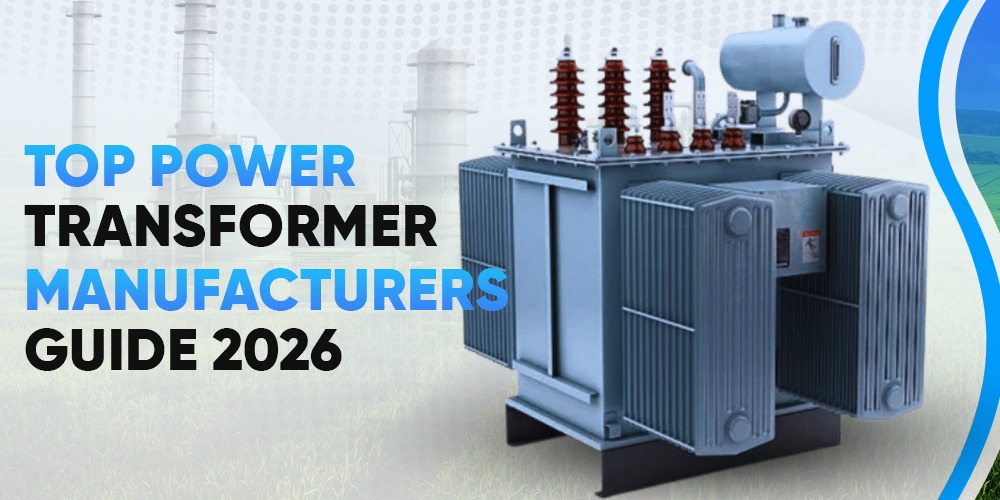
Top Power Transformer Manufacturers in 2026
Why Choosing the Right Power Transformer Manufacturer Matters:
When it comes to electrical infrastructure, the reliability of your power transformer is non-negotiable. Whether you’re powering an industrial facility, a commercial complex, a utility substation, or a renewable energy siteyour transformer is the heartbeat of your power distribution system.
Some offer cutting-edge technology, automation, and global certifications.
Others focus on cost but compromise safety or lifespan.
This is why choosing the right manufacturer is one of the most critical decisions for engineers, procurement heads, and project consultants.
What Makes a Good Power Transformer Manufacturer?
Before jumping into lists, it’s important to know what defines a trustworthy manufacturer. The most reliable companies share these qualities:
A. International Certifications:
Look for:
- ISO 9001 (Quality)
- ISO 14001 (Environmental Management)
- ISO 45001 (Safety)
- CE marking
- UL certification
- IEC & ANSI compliance
These certifications prove the products meet global safety and performance standards.
B. Strong R&D Capabilities:
Top manufacturers invest heavily in:
- Amorphous metal cores
- Low-loss designs
- Smart transformer systems
- Digital monitoring
- IoT-based diagnostics
This ensures you’re buying a transformer that lasts decadesnot just years.
C. High Production Capacity:
Large factories provide:
- Faster delivery
- Cost efficiency
- Customization flexibility
- Consistent quality
Production capacity also reflects technological maturity.
D. Advanced Testing Facilities:
A reliable manufacturer conducts tests like:
- Routine tests
- Type tests
- Special tests (DGA, Partial Discharge, Lightning Impulse, etc.)
These tests ensure long-term performance without breakdowns.
Types of Power Transformers Manufacturers Produce
Understanding types helps buyers make informed decisions.
- Step-Up Transformers: Increase voltage for efficient transmission.
- Step-Down Transformers: Reduce voltage for safe distribution.
- Oil-Filled Transformers: Most common in industrial and utility applications.
- Dry-Type Transformers: Used in enclosed spaces like malls, hospitals, tunnels, and basements.
- Distribution Transformers: Used near consumer points.
- Power Transformers: Used in transmission networks for high-voltage power systems.
- Custom-Built Transformers: Manufacturers often build:
- Solar transformers
- Wind farm transformers
- Furnace transformers
- Rectifier transformers
- Substation transformers
How to Choose the Right Power Transformer Supplier
Here’s a comprehensive checklist:
A. Voltage Rating Compatibility : Ensure primary and secondary voltages match your system requirements.
B. Technical Specifications: : Check:
- Impedance
- Cooling method
- Insulation class
- Vector group
C. Quality & Manufacturing Standards: Do they follow IEC or ANSI standards?
D. Warranty & After-Sales Service: Always ask:
- On-site service availability
- Spare parts availability
- Warranty period
E. Pricing vs Long-Term Value: A cheaper transformer may cost more in
- Losses
- Maintenance
- Downtime
Choose long-term ROI over short-term savings.
Manufacturing Process Overview:
A reputable manufacturer follows a rigorous process:
Step 1: Core Fabrication: Laminated silicon steel or amorphous metal.
Step 2: Winding Production: Copper or aluminum windings designed with precise turns ratio.
Step 3: Insulation & Assembly: Paper, epoxy, or oil-based insulation.
Step 4: Tank Fabrication: Robust steel tank with corrosion-resistant coating.
Step 5: TestingIncludes:
- Heat run test
- Dielectric test
- Impulse test
- Partial discharge
Step 6: Quality Assurance: Final inspection before dispatch.
Latest Trends in Power Transformer Manufacturing
- Smart Transformers: With sensors and IoT-enabled monitoring.
- Eco-Friendly Oils: Biodegradable ester oils replacing mineral oil.
- AI-Based Predictive Maintenance: Detects failures before they occur.
- High-Efficiency Designs: Amorphous core materials reduce losses by up to 70%.
- Modular Transformers: Easier installation and lower downtime.
Choosing the right power transformer manufacturer is not just about priceit’s about reliability, safety, and long-term performance. With the rapid expansion of renewable energy, smart grids, and industrial automation, selecting a certified, technologically advanced manufacturer is more important than ever.

Leave a Reply
Want to join the discussion?Feel free to contribute!